A sourcing agent commonly coordinates supplier discovery and project activities on a service-fee or commission basis, while a trading company commonly buys from a manufacturer and resells to the buyer. Real-world business models vary, so confirm the contracting seller, invoice issuer, fee structure, title to goods and responsibility for quality in writing.
Key takeaways
- Labels such as “agent”, “sourcing company” and “trading company” do not identify the full legal model.
- Ask who signs the purchase contract and issues the commercial invoice.
- Understand how the intermediary earns revenue: fee, commission, markup or a combination.
- Clarify who owns tooling, samples, drawings and inventory.
- Match the model to your need for control, convenience and accountability.

Why the distinction matters
The person coordinating the conversation may not be the company that manufactures the goods or invoices the buyer. This can be workable, but the commercial structure affects payment, warranties, documentation, ownership of custom work and how problems are escalated.
Understand the arrangement before approving a purchase order. Do not rely only on a website label or a verbal statement about “direct factory access”. Ask for the legal names and responsibilities of the parties involved.
Common operating models
| Question | Service-based sourcing agent | Trading company / reseller |
|---|---|---|
| Who sells the goods? | Often the factory sells directly; the agent provides coordination under a separate service agreement. | The trading company often purchases from a factory and resells to the buyer. |
| How is the intermediary paid? | May charge a sourcing fee, commission or project fee. | Often earns through resale margin or a commercial markup. |
| Who controls supplier selection? | Buyer and agent may jointly evaluate options. | The trading company may select its manufacturing partners. |
| Who manages quality? | Depends on the agreed service scope and inspection arrangements. | Depends on the sales contract and reseller’s quality process. |
| Potential benefit | Supplier transparency and direct buyer control may be greater. | A single commercial counterparty may simplify purchasing and consolidation. |
This is a comparison of common patterns, not a legal definition. A company can combine sourcing services, trading, export coordination and quality management. The contract and actual payment flow are what matter.
Questions to ask before choosing
- Who is the seller of record? Obtain the registered company name that will sign the purchase contract and issue invoices.
- How does the service provider earn revenue? Ask for a written fee schedule and whether any factory commission or markup applies.
- Who receives funds? Confirm the beneficiary’s legal name and account details. Independently verify any last-minute bank-account change.
- Who owns custom work? Specify ownership or usage rights for drawings, tooling, molds, firmware, artwork and approved samples.
- Who handles defects? Agree how nonconformities are reported and who coordinates corrective actions.
- Who arranges export and freight? Confirm exporter, forwarder, Incoterm, insurance and destination responsibilities.
When a service-based agent may be a fit
A service-based model may suit a buyer who wants to compare factories, keep direct visibility of quotes, coordinate custom product work or manage a multi-stage development project. It requires clear project documentation and an agreed scope.
When a trading company may be a fit
A trading company may be convenient when the buyer values a single seller, consolidated purchasing or an existing product range. The buyer should still understand whether the reseller controls production, how subcontracting is handled and what quality evidence is available.
Compare offers fairly
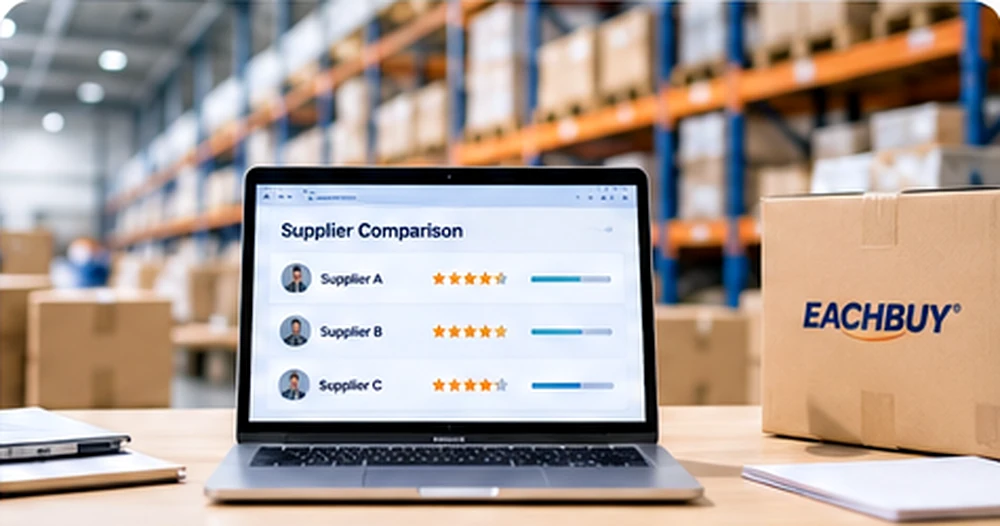
Normalize the offers before comparing prices. Check the product specification, materials, included components, packaging, MOQ, tooling, sample charges, lead time, inspection scope, payment terms, Incoterm and after-sales responsibilities. A low unit price with missing packaging or no agreed inspection can be more expensive after the full project is considered.
Where EACHBUY fits
EACHBUY positions its services around product development, factory sourcing, OEM/ODM coordination, quality follow-up and supply-chain support. The commercial structure and specific deliverables should be confirmed for each engagement before work begins.
Review EACHBUY services · Start a project discussion.
Frequently asked questions
Can a trading company also provide sourcing services?
Yes. Many businesses combine functions. Ask which entity sells the goods and which services are separately included.
Is direct factory purchasing always safer?
Not automatically. Direct purchasing can improve transparency but still requires supplier verification, contract controls, clear specifications and quality management.
Can I ask an agent to disclose factory identity?
You can ask what supplier information is available and at which project stage. Agree disclosure, confidentiality and non-circumvention terms in writing.