

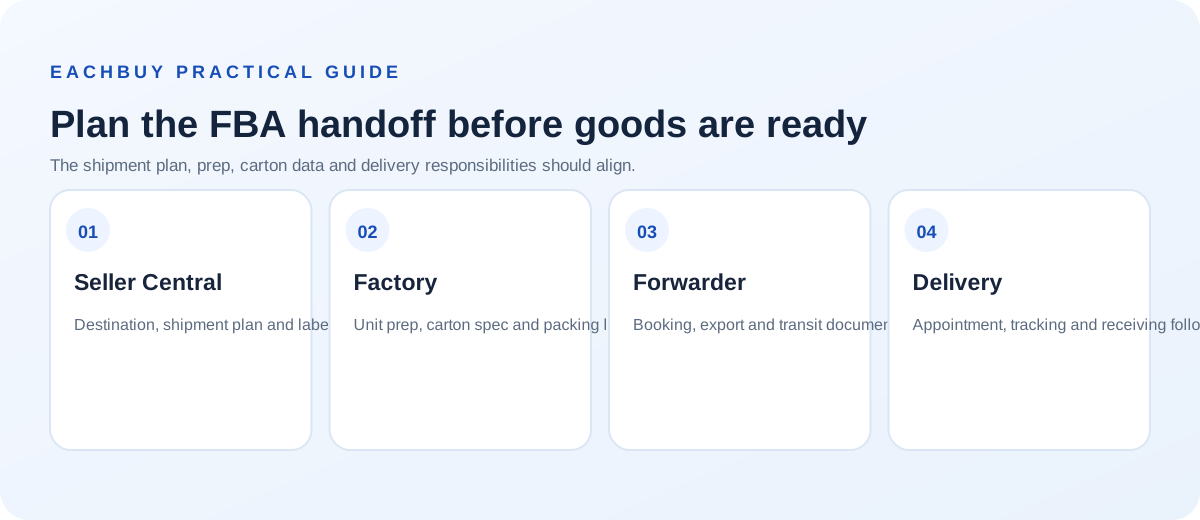
A successful China-to-FBA shipment begins before the goods are finished. Align the Seller Central shipment plan, product preparation, box content data, labels, carton dimensions and weights, export documents, freight booking, importer responsibilities and final delivery instructions. Always verify current instructions in the relevant Seller Central marketplace.

1. Confirm the destination and shipment plan
Confirm the marketplace, fulfillment-center destination, shipment type and planned ship window. Create or review the shipment workflow in Seller Central and share applicable requirements with the factory and freight provider. Do not rely on an old spreadsheet or previous shipment label; shipment IDs, destinations and labeling instructions are shipment-specific.
2. Prepare product-level information
- Seller SKU and product identifier.
- Unit quantity and pack configuration.
- Barcode / FNSKU responsibilities and label position.
- Prep requirements for the specific product and category.
- Retail packaging, warnings or other labels where applicable.
- Product compliance documents and test reports when required.
3. Confirm carton and pallet data
Before goods are packed, agree carton dimensions, gross weight, units per carton, carton count and pallet configuration if applicable. Ask the factory to provide final packing details after actual pack-out, not only estimated numbers. Inaccurate carton data can affect freight pricing, shipment creation and receiving coordination.
4. Assign preparation and labeling responsibilities
For each task, identify who is responsible: factory, buyer, prep provider or freight partner. In the U.S. store, Amazon states that its FBA prep and item-labeling services ended for shipments created from January 1, 2026. Sellers need to prepare and label products themselves or use an external service provider, subject to current rules for their shipment. Check the latest Seller Central instructions before relying on an older process.
Official reference: Amazon FBA Prep Service update. The help page is account-dependent; verify the current instructions in Seller Central.
5. Choose a freight and customs plan
Compare air, express, rail or ocean options based on product characteristics, volume, required delivery window and total landed cost. Confirm the named shipper, consignee, importer of record, customs broker, insurance, Incoterm and who is responsible for duties and taxes. A freight quote should state its assumptions and exclusions. For regulated or sensitive goods, make sure the forwarder has the correct product and documentation details before booking.
6. Prepare shipment documents and handoffs
- Commercial invoice and packing list with consistent descriptions and quantities.
- Shipping plan and carton / pallet labels generated for the shipment.
- Product and compliance documents required by the destination.
- Freight booking confirmation, transport document and cargo insurance where arranged.
- Contact details for factory dispatch, forwarder, customs broker and receiving destination.
- Tracking milestones and escalation contact for delays or exceptions.
7. Do a final handoff review before cargo leaves
Check that actual carton data matches the shipment plan, labels are readable and applied to the correct cartons, product prep has been completed, documents are consistent and the forwarder has the correct delivery instructions. Keep photos of the final packing condition and carton markings. Agree who will respond if a shipment is delayed, held or arrives with a discrepancy.
Common shipment handoff problems
- Old labels are left on reused cartons.
- Carton dimensions or weights change after shipment creation.
- Factory and freight partner use different packing lists.
- Product prep or barcode responsibility is not assigned.
- Importer, customs broker or delivery appointment roles are unclear.
- Seller Central rules are copied from an old shipment instead of checked again.
Frequently asked questions
Can a factory ship directly to Amazon FBA?
It may be possible depending on the shipment setup and the responsibilities agreed with the factory and freight provider. Confirm importer, customs, labels, prep, appointments and shipment instructions before dispatch.
Does Amazon still prepare and label U.S. FBA shipments?
Amazon’s U.S. FBA Prep Service notice says prep and item-labeling services ended from January 1, 2026 for applicable shipments. Sellers should confirm current details in Seller Central.
Should shipment labels be printed before production is complete?
Shipment-specific labels should be generated from the correct current shipment plan and applied according to current instructions. Avoid reusing labels from previous shipments.