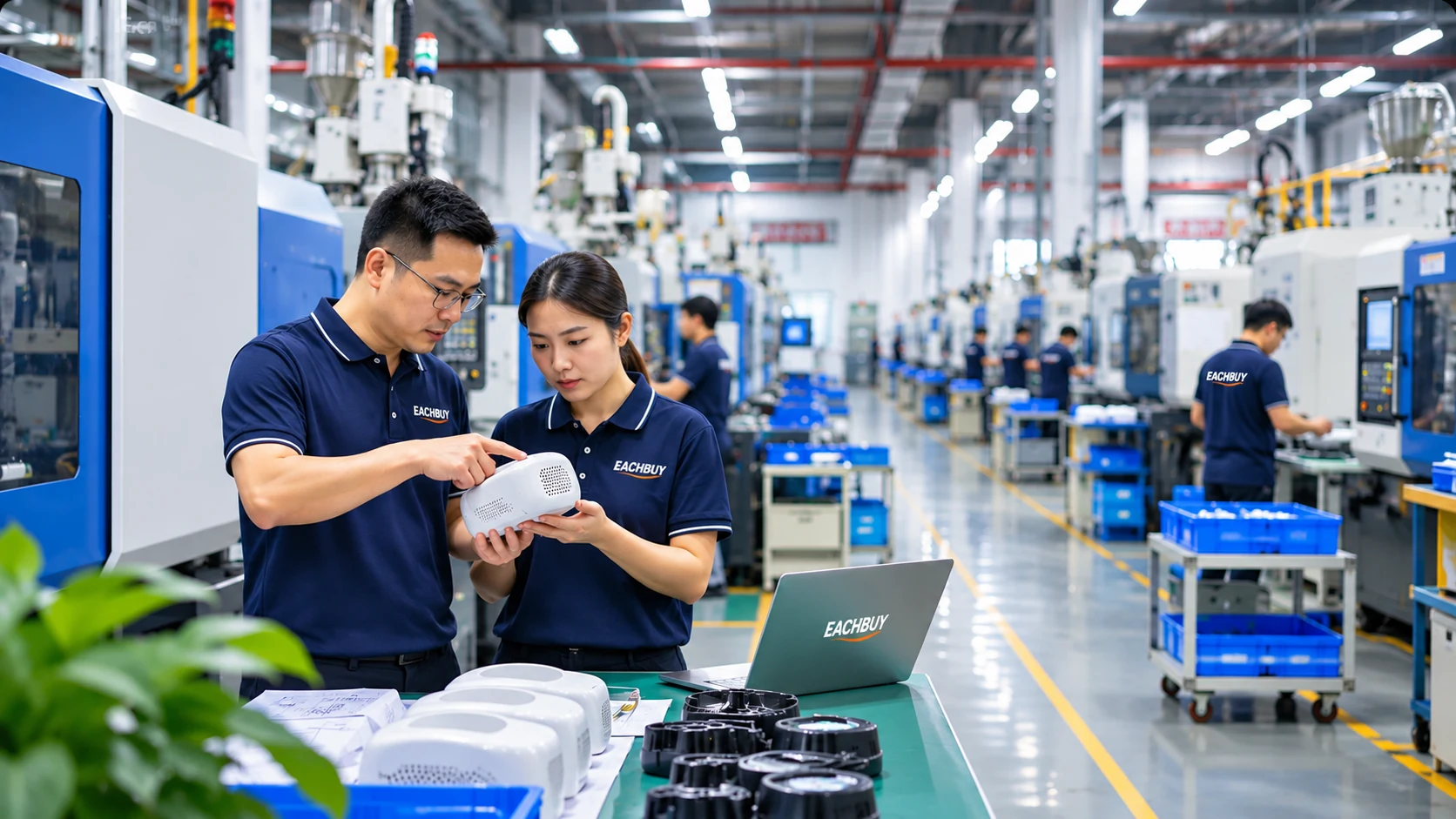
Do not approve a sample because it looks close to the reference. Compare it against a written specification and test every critical function under realistic conditions. Record defects, changes, open questions and the exact sample version that becomes the approved reference for production.
Before the sample arrives
Prepare a checklist from the product brief. Identify critical-to-function features, key dimensions, material requirements, cosmetic expectations, packaging details and tests needed for the intended use. Decide who will review the sample and who can approve changes. If the product is electrical, battery-powered, wireless, child-directed or used around pets, identify specialist safety and compliance questions early.
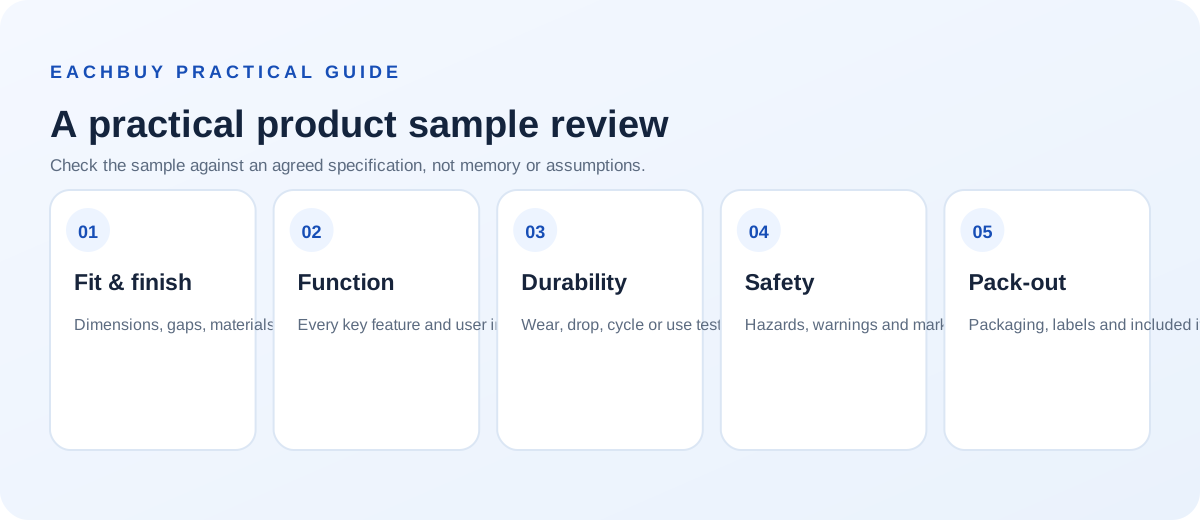
1. Fit, form and finish
- Overall dimensions, weight and fit of mating parts.
- Gaps, seams, alignment, sharp edges and surface finish.
- Color, texture, gloss, printing and logo placement.
- Buttons, lids, doors, clips, straps and other moving parts.
- Visible marks, scratches, discoloration or inconsistent finish.
2. Function and performance
Write a test for each key function. Avoid vague statements such as “works well”. Record the setup, expected result and actual result. For an electronic product, this may include power-on behavior, charging, battery operation, connectivity, indicators, firmware version or thermal behavior. For a mechanical product, it may include movement, locking, load, adjustment, noise or cycle checks. Tests should match the product, not a generic checklist.
3. Materials and durability
Confirm that the sample uses the intended materials and component grades. Look for flex, cracking, deformation, odor, coating issues, fastener problems or premature wear. Decide which durability tests are relevant: drop, vibration, cycle, abrasion, pull, water ingress or other use-specific checks. A sample review is not a substitute for formal laboratory testing when a product rule or risk assessment requires it.
4. Safety and user experience
Consider how a customer may misuse the product, where it will be used and who may have access to it. Review entrapment, pinch points, small parts, temperature, battery access, electrical protection, warnings, instructions and foreseeable misuse. Applicable requirements depend on destination market and product category. Engage an appropriate testing laboratory or specialist when needed.
5. Packaging and pack-out
- Is the retail box the approved size and construction?
- Are all accessories, manuals and inserts included?
- Are labels and barcodes correct and scannable?
- Does the product remain protected in transit?
- Do carton dimensions and pack quantity match the shipping plan?
Record changes by sample version
Use a sample log with the date received, sample number, supplier, version, photos, test results, defects, requested changes, decision owner and next action. If the supplier changes a motor, battery, material, component supplier or production method, assess whether the sample must be reviewed again.
When the sample is approved, create a “golden sample” record. Identify the physical sample, retain photos and approved drawings, and list the critical characteristics that must be maintained. Make the reference available to both buyer and manufacturer, with a clear process for future revisions.
Sample review record
| Check | Result | Evidence / Notes |
|---|---|---|
| Dimensions and fit | Pass / Fail / N/A | Measurements and photos |
| Materials and finish | Pass / Fail / N/A | Material / color / finish reference |
| Function test | Pass / Fail / N/A | Test setup and outcome |
| Durability checks | Pass / Fail / N/A | Cycles / drops / use conditions |
| Safety and warnings | Pass / Fail / N/A | Risk / specialist review |
| Packaging and accessories | Pass / Fail / N/A | Pack-out photos and label check |
| Open changes | Owner / due date | Revision number and action |
Frequently asked questions
How many sample rounds are normal?
There is no fixed number. It depends on complexity, supplier capability, material availability and how complete the initial specification is. Plan for iteration rather than assuming the first sample will be production-ready.
Can I approve a sample by photo?
Photos can confirm some visual details, but they cannot reliably confirm dimensions, materials, functional performance, feel, sound, durability or safety. Decide which checks require physical samples or testing.
What should happen after sample approval?
Freeze the approved version, update production documents, confirm the quality plan and require approval for later changes.