
A useful product requirements document (PRD) explains what the product must do, who it is for, where it will be sold, how it should be built, how it will be checked and which commercial assumptions matter. It need not be a perfect engineering drawing on day one; it must be clear enough for suppliers to identify open questions and quote against the same baseline.
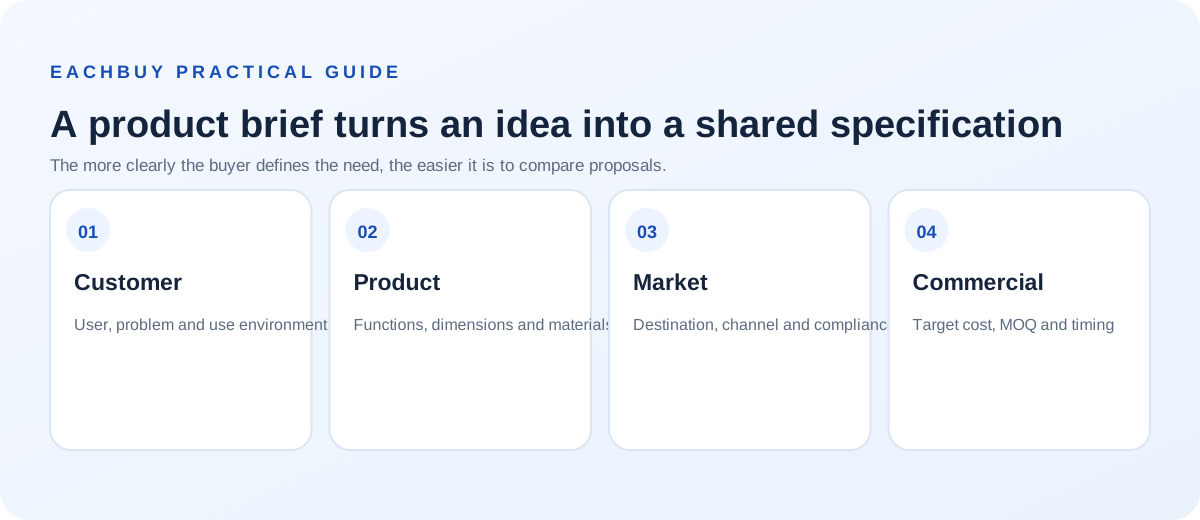
Why a written brief matters
Two suppliers can quote very different products even when they receive the same short description. One may include a different material, accessory, finish, packaging method or testing assumption. A written brief reduces this ambiguity and makes supplier offers more comparable.
A PRD also creates a reference for sample approval and production changes. When everyone works from the same version, it is easier to see what changed and whether it affects cost, safety, appearance or lead time.
The 10 sections to include
- Product purpose: Describe the problem the product solves and the intended user.
- Use environment: Explain where and how the product will be used, including indoor/outdoor, wet/dry, child/pet access or other relevant conditions.
- Core functions: List must-have functions separately from optional features.
- Dimensions and weight: Provide target dimensions, tolerance needs and reference drawings where available.
- Materials and finish: Identify preferred materials, color, texture, finish and any applicable restricted-substance requirements.
- Electrical or mechanical details: Include power, battery, connectors, motors, controls, moving parts or other system information.
- Market and channel: State sales markets and channels, because labeling, packaging and applicable requirements vary.
- Packaging and included items: List retail packaging, manuals, accessories, labels, barcodes and carton expectations.
- Quality and testing: Define critical functions, inspection points, acceptance criteria and required evidence.
- Commercial assumptions: State target price range, estimated quantity, MOQ expectations, sample timing and target launch window where known.
Separate must-haves from preferences
Use three labels in the brief: Required, Preferred and Open for supplier suggestion. This helps factories propose improvements without silently changing an essential requirement. A safety-related feature may be required, while a cosmetic finish may be open to alternatives if cost or durability improves.
Attach references, but explain what matters in each one
Reference photos, competitor links, sketches and existing samples are useful, but a supplier should not be expected to infer the full requirement from a single image. Annotate what you like, what you do not want copied, and which dimensions or features are important. Use reference products to explain functionality or category positioning, not to request copying protected artwork or proprietary designs.
Make quotations comparable
Ask each supplier to identify assumptions and exclusions. A comparison sheet should separate unit price, MOQ, tooling, sample charges, packaging, printing, testing, inspection, lead time and payment terms. If one quote assumes a different material or pack-out, record the difference rather than comparing headline prices as if they were equivalent.
Use a version-controlled sample approval process
Give each brief and sample a version number and date. Record sample changes, who approved them and which open items remain. Identify the approved reference sample clearly, with photos and a written list of critical specifications. Any later substitution should be reviewed before production continues.
A simple one-page brief outline
| Project field | What to enter |
|---|---|
| Product / working name | Short description and reference photo or link |
| Target customer | Who will use it and in what situation |
| Must-have functions | Required functions and performance expectations |
| Materials / dimensions | Known materials, target dimensions and tolerances |
| Target market | Country, channel and known compliance questions |
| Packaging | Retail unit, accessories, manual, labels and shipping carton |
| Quantity / timing | Estimated order range and target milestone dates |
| Quality checks | Critical defects, functional tests and approval criteria |
Frequently asked questions
Do I need engineering drawings before contacting a factory?
No. A clear brief, reference product and intended use can be enough to begin a feasibility discussion. Detailed drawings may be needed later for accurate costing and production.
Should the PRD include a target cost?
It is useful to provide a target range or cost objective if you have one. Clarify whether it includes packaging, tooling, testing and logistics.
Who should approve the final specification?
The product owner should approve the final requirements and reference sample. Engineering, quality, regulatory or other specialists may need to review particular technical and market requirements.